Why Do I Have Cracks in My Basement Walls?
Learn why basement wall cracks appear and how to address them before they worsen. Get expert tips for protecting your foundation.
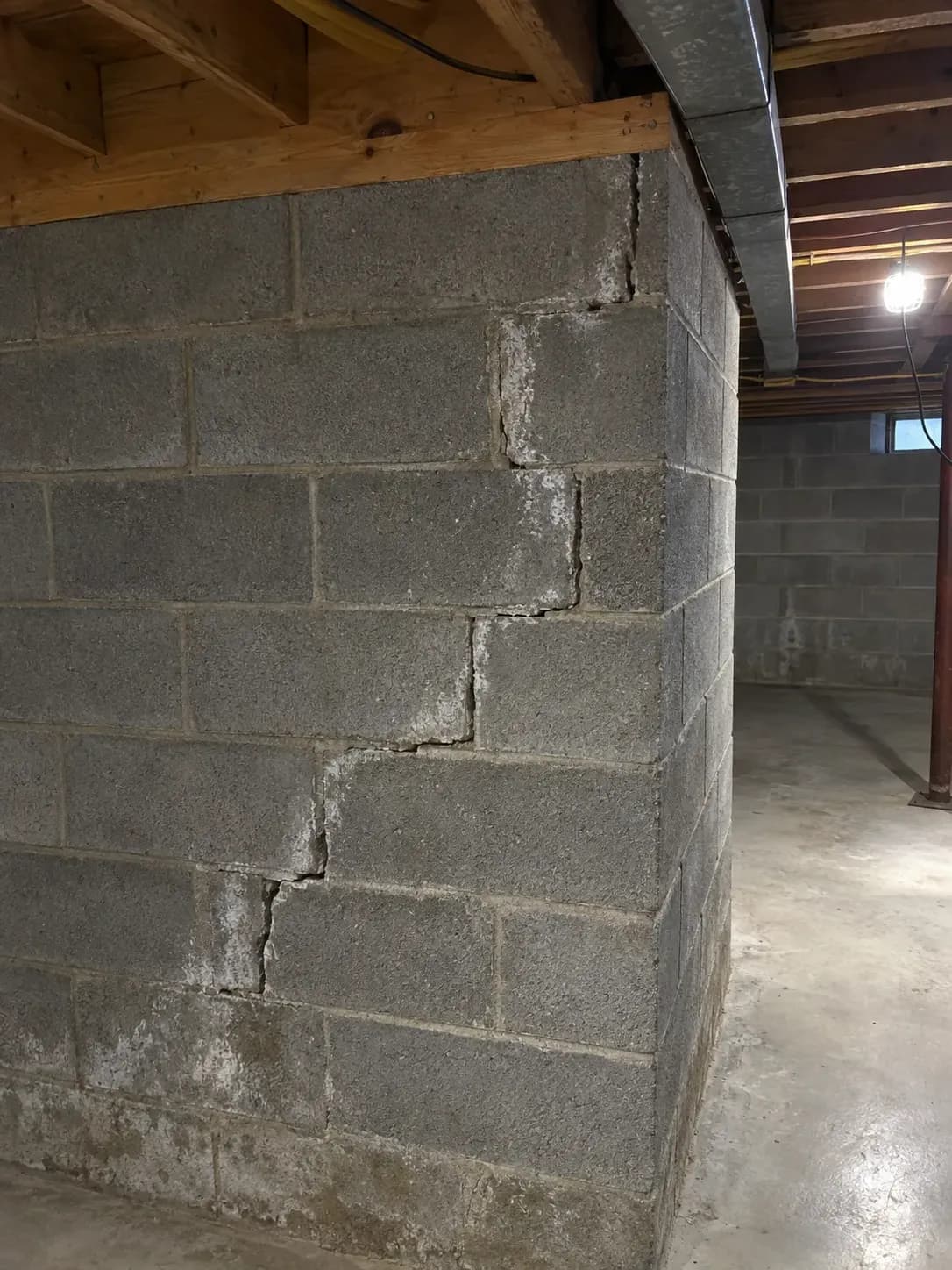
You're carrying laundry downstairs and notice a line running across the wall that wasn't there before, or at least you don't remember it. Now you're wondering: is this normal, or is my foundation in trouble?
It's one of the most common calls we get at Precision Waterproofing & Foundation Repair. The honest answer is that it depends on the crack. Some are harmless. Others are your foundation telling you something is pushing on it or settling beneath it. The good news is that a crack's direction, width, and location tell you a lot about what's going on.
What Causes Basement Wall Cracks?
Most basement cracks come down to a handful of causes. In North Georgia, several of them tend to show up together.
Concrete shrinkage. Poured concrete shrinks slightly as it cures. That can leave thin cracks in the first year or two after a home is built, and they're usually not structural (NRMCA).
Hydrostatic pressure. When the soil around your foundation fills with water, that water pushes against the walls. The deeper the water, the harder it pushes. Learn more in our article on hydrostatic pressure and basement leaks.
Red clay soil. Much of North Georgia sits on dense red clay that drains slowly and can stay saturated for days after a heavy rain. It softens when wet and shrinks as it dries, so the pressure on your walls changes with the weather. See how Georgia red clay affects your foundation.
Poor drainage. Clogged gutters, short downspouts, and soil that slopes toward the house all send extra water right to the foundation wall.
Settlement. If the soil under one part of your footing compresses, washes out, or was poorly packed during construction, that section can sink lower than the rest. Walls crack where the movement happens.
Hillside lots and backfill. Many homes here are built on sloped, cut-and-filled lots. The soil placed around a new foundation is often looser than the ground around it, so it can settle and direct water toward the house for years.
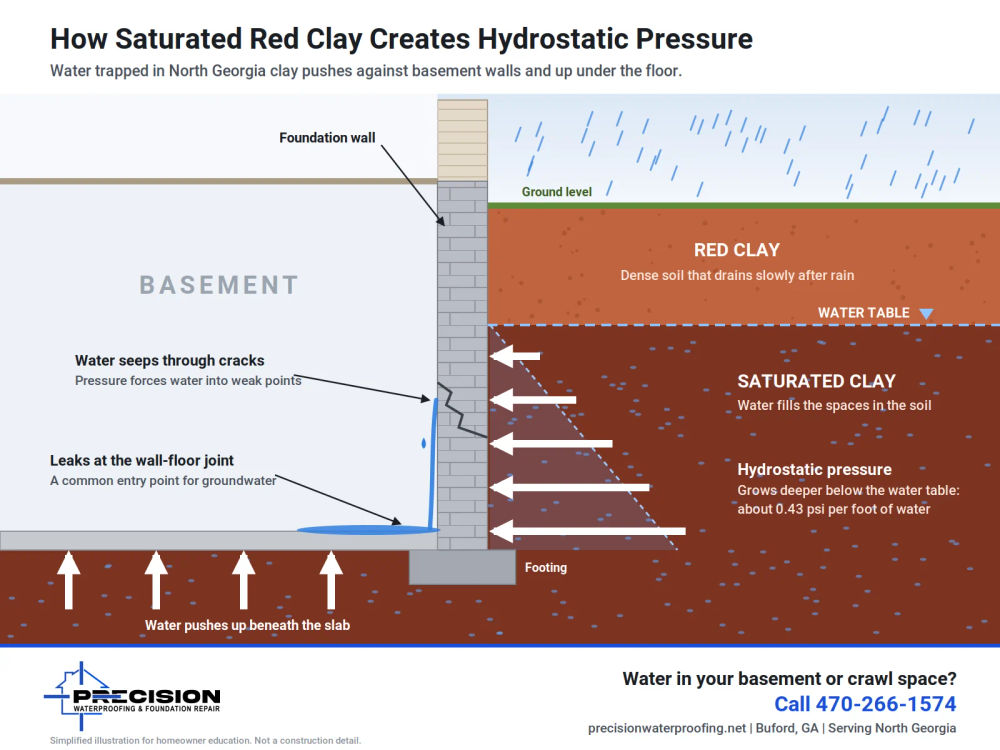
Saturated soil pushes on your foundation walls, and the pressure increases with depth. Over time, that force can crack a wall or push it inward.
How to Read the Crack in Your Wall
Vertical cracks
A vertical crack runs straight up and down, or close to it. In poured concrete walls, these are the most common type and are usually the least worrying. Most are caused by shrinkage or minor settling.
The catch: even a harmless vertical crack can let water, soil, and radon gas into your basement. If it's leaking, it needs to be sealed.
Diagonal cracks
Diagonal cracks run at an angle, often starting at the corner of a window or basement door. A thin diagonal crack is usually from shrinkage. A diagonal crack that's wider at one end than the other can point to settlement, where one part of the foundation is sinking faster than the rest.
Horizontal cracks
This is the one to take seriously. A horizontal crack running along the length of a wall, often a few feet below ground level, usually means soil and water pressure outside are pushing the wall inward. If you see a horizontal crack along with a wall that bows, leans, or bulges, call a professional soon. That wall is losing the fight against the soil behind it.
Stair-step cracks
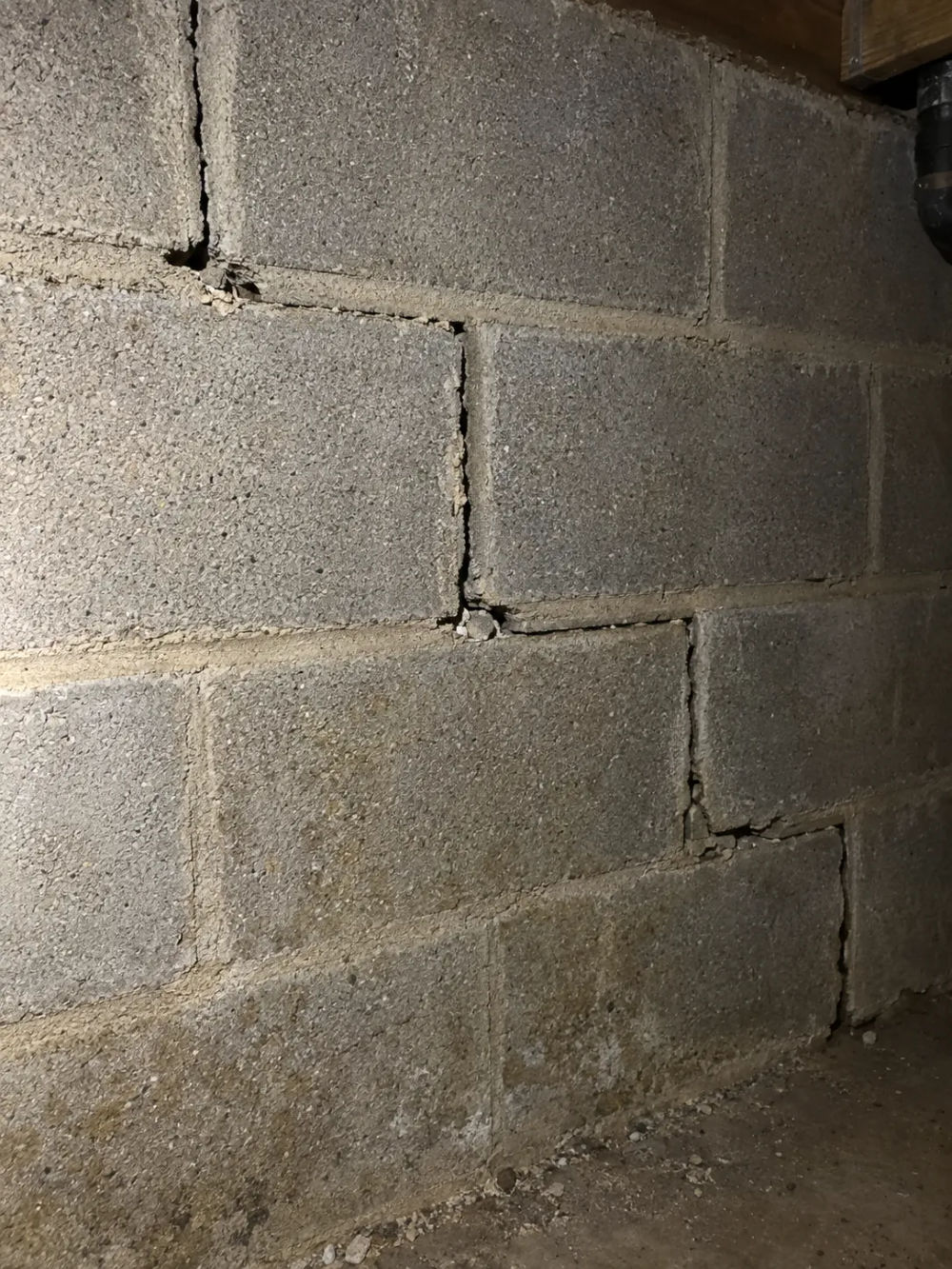
Stair-step cracks follow the mortar joints in a block wall, because mortar is weaker than the block itself.
Stair-step cracks show up in block (cinder block) walls, which are common in North Georgia homes. The crack zigzags through the mortar joints like a staircase. They often start near a corner and usually point to settlement, soil pressure from outside, or both. A thin stair-step crack that isn't changing may be minor. One that's widening, leaking, or paired with a bowing wall needs a professional look.
Signs a Crack Is More Than Cosmetic
Have a crack evaluated if you notice any of the following:
It's wider than about 1/4 inch, or it's getting wider over time
It runs horizontally, or the wall around it bows or leans inward
It's a stair-step crack in a block wall, especially near a corner
Water, damp spots, or orange-red clay stains show up along it
White, chalky residue (efflorescence) is building up on the wall
The two sides of the crack don't line up, with one side pushed in or dropped down
Doors or windows upstairs have started sticking
New cracks keep appearing
For a wider checklist, see our guide to the top 7 warning signs of foundation problems.
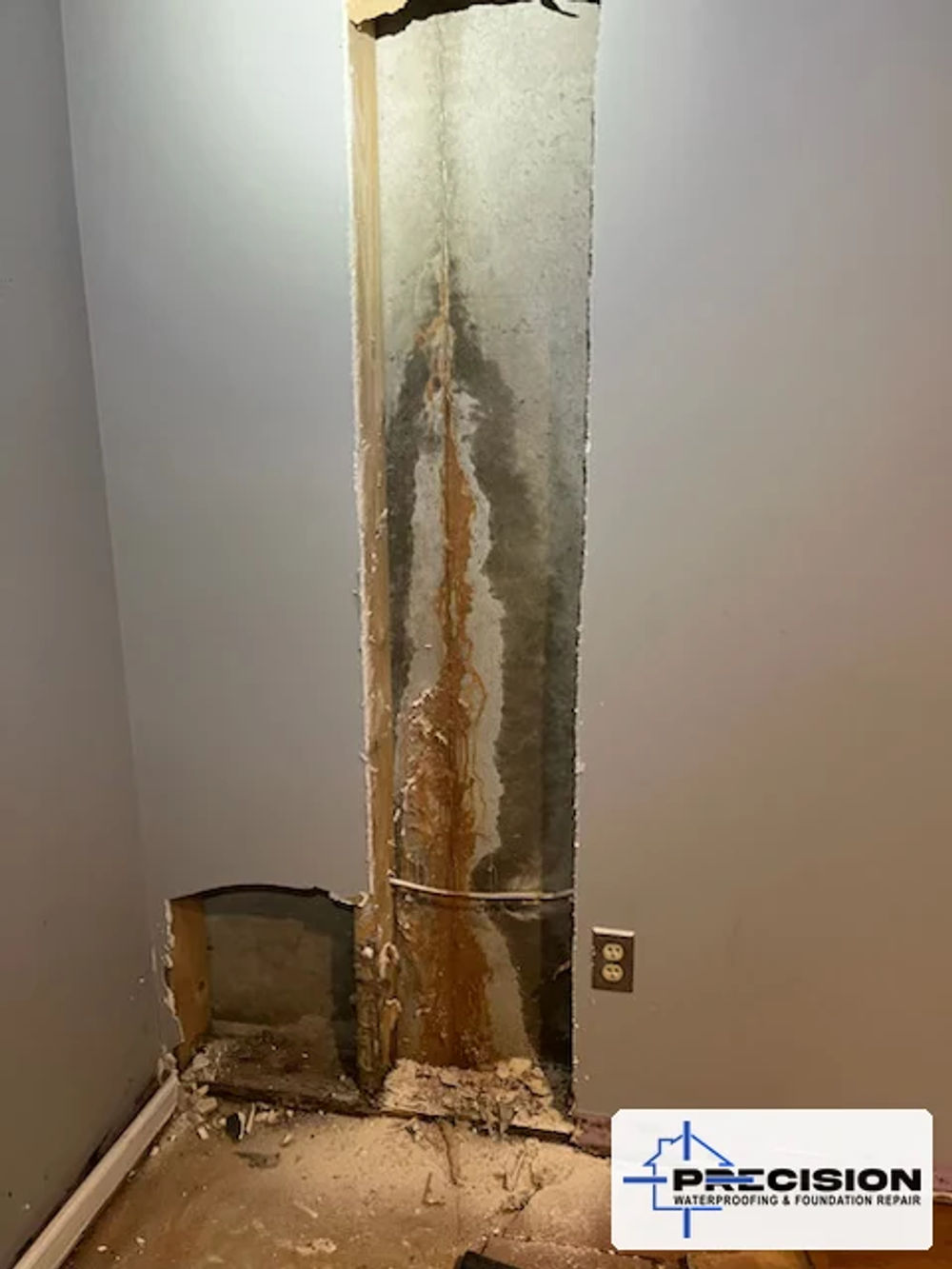
What Precision found behind the drywall in a North Georgia basement. Water carrying red clay came through a crack in the foundation wall and stained the concrete to the floor.
Finished basement? Drywall and paneling can hide a crack for years. Watch for stained or swollen baseboards, peeling paint, damp carpet, or a musty smell along an outside wall.
A Simple Way to Watch a Crack
If you're not sure whether a crack is getting worse, track it:
Mark both ends of the crack with a pencil and write the date next to each mark.
Measure the width at its widest point and write it down.
Take a photo with a tape measure or coin beside the crack for scale.
Check it again every month or two, and after heavy rain.
If the crack grows longer, gets wider, or starts leaking, it's time to call. Bring your photos, because they help us see how the wall has changed.
Why Patching It Yourself Usually Doesn't Last
Hardware-store caulk and hydraulic cement can cover a crack, but they only treat the surface. If water pressure or settlement caused the crack, the patch will usually crack or leak again, and the real problem keeps growing behind it. The lasting fix starts by finding out why the wall cracked.
How Precision Fixes Basement Wall Cracks
We start with an on-site evaluation to find the cause, then match the repair to the problem:
Crack injections seal vertical and diagonal cracks in poured concrete walls from the inside, stopping water and soil gas. Here's how crack injections work.
Carbon fiber straps reinforce walls with horizontal cracks or minor bowing. Learn more about carbon fiber strapping.
Steel I-beams brace walls that have bowed or moved more. See our article on I-beam wall support.
Foundation piers stabilize settling footings as part of our foundation repair services.
Basement waterproofing and interior drain systems relieve the water pressure that caused the crack in the first place.
Excavation and exterior waterproofing fix drainage problems from the outside when the source is the soil and grading around your home.
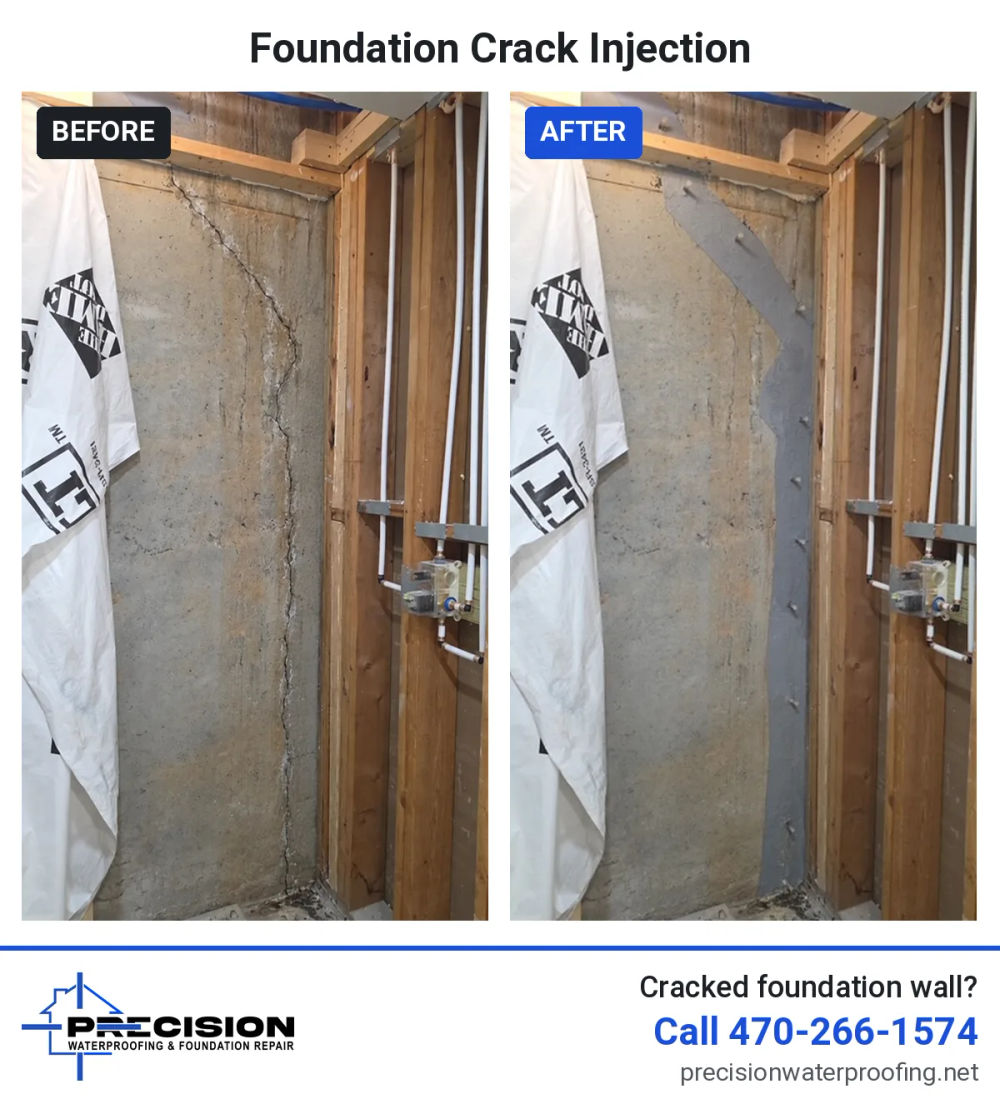
A Precision crack injection job. Before: the crack running down the foundation wall. After: the crack sealed along its full length, with injection ports set to fill it and stop water from coming through.
You can see more of our work on our projects page and learn more about foundation crack repair.
Get Your Cracks Checked by a Local Pro
Most basement cracks are fixable, and catching them early usually means a smaller, less expensive repair. We work in North Georgia soil every day, from Buford and Gainesville to Cumming and Dahlonega.
Seeing cracks in your basement walls? Call Precision Waterproofing & Foundation Repair at 470-266-1574 or request an estimate online to schedule an evaluation. We're based in Buford and serve homeowners across North Georgia.