How a Basement Interior Drain System Works
Explore how interior drain systems manage water ingress in basements. Learn about installation, benefits, and when you might need one.
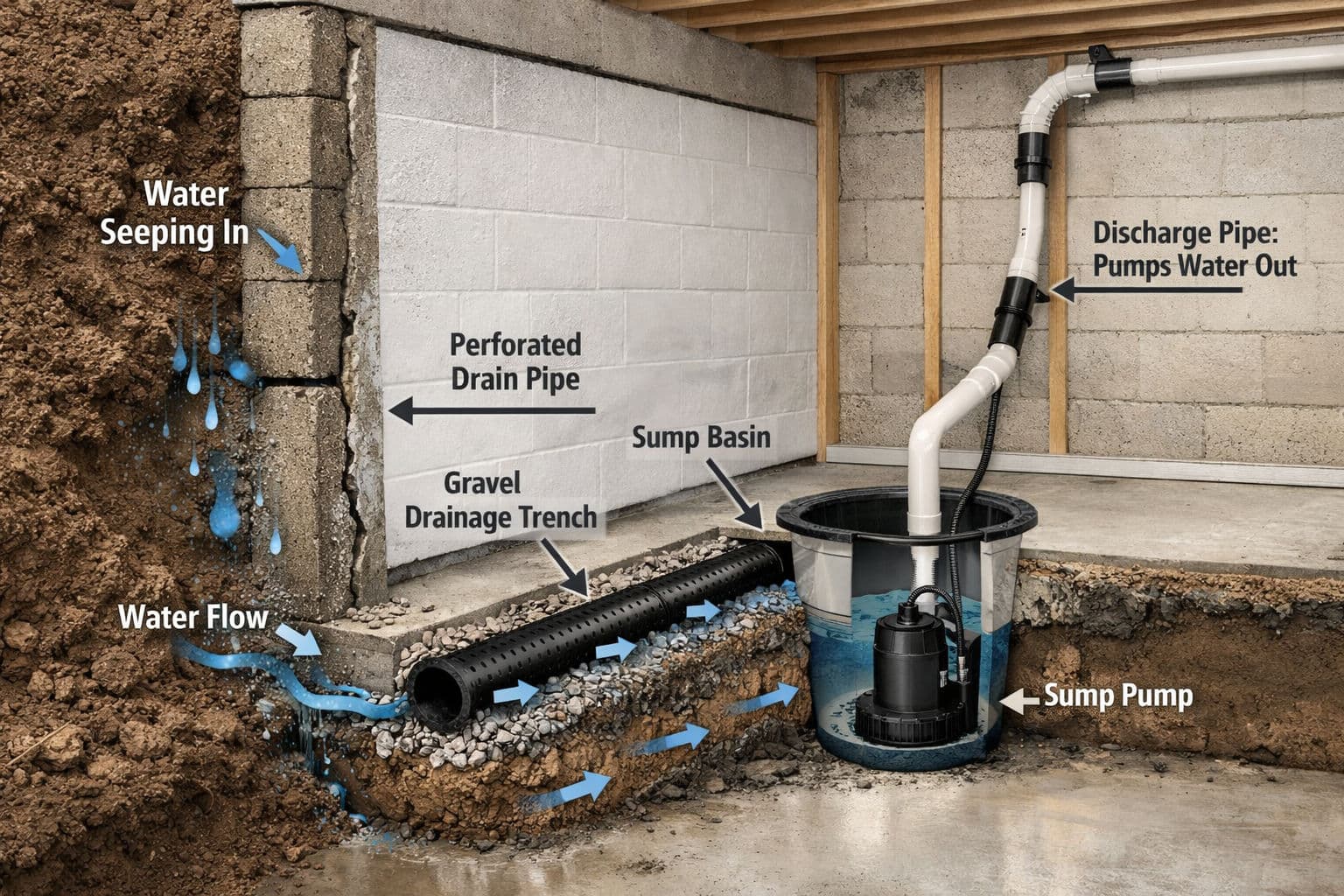
What Is a Basement Interior Drain System?
An interior drain system (also called an interior perimeter drain or French drain system) is installed along the inside perimeter of your basement floor. Its job is simple:
Capture water at the foundation wall and direct it safely away from your home.
Instead of trying to block water completely from the outside (which isn’t always possible), this system manages water once it enters the foundation wall area and redirects it before it can cause damage.
How Water Gets Into Your Basement
Before understanding how the system works, it’s important to know how water enters:
Hydrostatic pressure builds up in the soil around your home.
Water pushes against foundation walls and floor joints.
Moisture seeps through cracks, porous concrete, or the wall-floor joint.
Water collects along the basement perimeter.
This is where an interior drain system takes over.
Step-by-Step: How the System Works
1. Trench Is Created Along the Perimeter
A narrow trench is cut into the concrete floor along the inside perimeter of the basement, typically next to the foundation wall.
2. Drain Pipe Is Installed
A perforated drain pipe is placed inside the trench. This pipe is designed to collect groundwater that enters at the wall-floor joint.
The pipe is surrounded by clean gravel or stone to allow water to flow freely into the system.
3. Water Is Directed to a Sump Pump
The drain pipe slopes toward a sump basin. As water collects in the system, it flows directly into the sump pit.
Inside the basin is a sump pump that activates automatically when water reaches a certain level.
4. Water Is Pumped Away from the Home
Once activated, the sump pump pushes the water through a discharge line that carries it safely away from the foundation.
This prevents water from pooling under your basement floor or rising into your living space.
Why Interior Drain Systems Work So Well
Unlike exterior waterproofing methods that require major excavation, interior systems:
Relieve hydrostatic pressure
Capture water before it spreads across the floor
Work year-round
Require minimal disruption to landscaping
Are often more cost-effective than exterior systems
They don’t just stop visible water — they control the source of the pressure causing the problem.
Additional Components That Improve Performance
A complete system may also include:
Vapor barriers on basement walls
Battery backup sump pumps
Dehumidifiers
Drainage matting behind finished walls
These additions help ensure long-term dryness and mold prevention.
Signs You May Need an Interior Drain System
You might benefit from a system if you notice:
Water pooling along basement walls
Damp or musty smells
Efflorescence (white powder on foundation walls)
Cracks in foundation walls
Previous flooding issues
Even minor moisture issues can lead to structural damage, mold growth, and decreased property value if left untreated.
Final Thoughts
A basement interior drain system doesn’t just “hide” water — it manages it effectively and permanently when installed correctly. By capturing groundwater at the point of entry and redirecting it away from your home, it protects your foundation, air quality, and investment.
If you’re dealing with basement moisture or flooding concerns, it’s important to have a professional evaluation to determine the best solution for your specific home.
Keeping your basement dry starts with controlling the water beneath it.