Why Is My Basement Leaking After It Rains? Hydrostatic Pressure Could Be the Cause
Is your basement leaking after heavy rain? Hydrostatic pressure from groundwater may be pushing water against your foundation walls or beneath the floor. Learn what causes it, the warning signs to watch for, and how proper drainage and waterproofing can help protect your home.


If your basement leaks after heavy rain, the water may not be coming from where you think.
Rain can saturate the soil around your home and cause groundwater to build up against your foundation or underneath the basement floor. As that water builds, it creates hydrostatic pressure—and that pressure can push water through cracks, joints, and other weak points in your foundation.
Understanding why this happens can help you determine whether you are dealing with a simple drainage issue, a foundation crack, or a larger basement waterproofing problem.
Why Is My Basement Leaking After It Rains?
A basement that stays dry most of the year but begins leaking after heavy rain is often experiencing a groundwater or drainage problem.
Common causes include:
Poor grading around the foundation
Gutters overflowing during storms
Downspouts draining too close to the house
Saturated soil around the foundation
Foundation cracks
Damaged or ineffective foundation drainage
Groundwater collecting beneath the basement floor
When the soil around your home becomes saturated, water looks for somewhere to go. If it cannot drain away from the foundation, it can begin building pressure against the walls and floor of your basement.
The water you see inside may only be the symptom. The real problem could be outside the foundation or underneath the concrete slab.
What Is Hydrostatic Pressure?
Hydrostatic pressure is the pressure created by standing groundwater.
As groundwater rises around your foundation, the pressure against your basement walls and floor increases.
That water may eventually find its way inside through:
Cracks in the basement floor
The joint where the wall meets the floor
Openings around pipes and utilities
Porous or deteriorated masonry
Other weak areas in the foundation
This is why some homeowners see water coming up through the basement floor even when there is no obvious leak running down a wall.
Why Does Water Come Up Through a Basement Floor?
Groundwater can collect beneath the concrete slab of your basement.
When enough water accumulates below the floor, hydrostatic pressure can push it toward cracks, joints, plumbing penetrations, and other openings.
This is also why simply sealing or painting over the visible wet area may not solve the problem.
If water is still building beneath the slab or outside the foundation, it will continue looking for another path inside.
Signs You May Have a Groundwater or Hydrostatic Pressure Problem
Some of the most common warning signs include:
Basement leaking after heavy rain
Water coming through basement floor cracks
Water where the basement wall meets the floor
Damp basement walls
Musty odors
High basement humidity
White chalky deposits on concrete or block walls
Recurring puddles after storms
A sump pump that runs frequently during or after heavy rain
These symptoms do not automatically mean hydrostatic pressure is the cause, but they are good reasons to have the drainage and foundation conditions around your home evaluated.
Is Every Basement Leak Caused by Hydrostatic Pressure?
No.
Basement water can come from several different sources, including:
Water heater leaks
Poor exterior grading
Overflowing gutters
Improper downspout drainage
Basement windows or window wells
Foundation cracks
Failed drainage systems
Groundwater beneath the slab
That is why a proper inspection should focus on identifying where the water is coming from before deciding how to fix it.
At Precision Waterproofing & Foundation Repair, LLC, we believe the right waterproofing solution starts with finding the source of the problem.
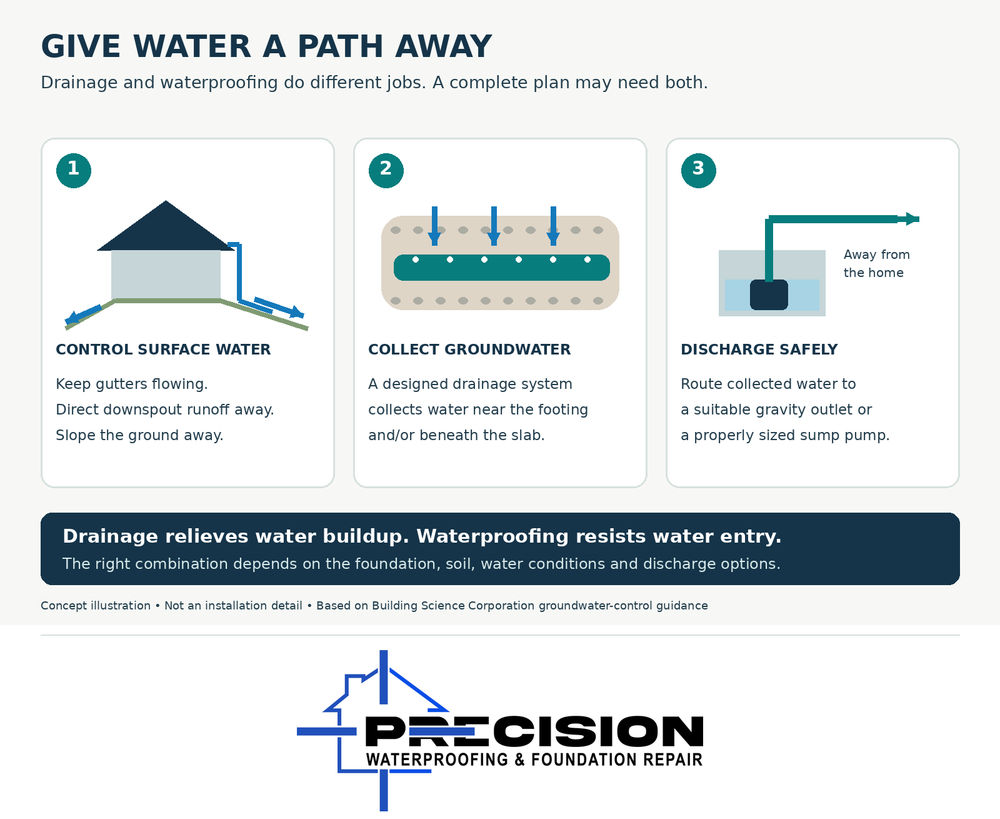
How Do You Reduce Hydrostatic Pressure Around a Basement?
The goal is not simply to cover the place where water appears.
The goal is to control and manage the water around your foundation.
Depending on the home and the source of the problem, solutions may include:
Extending downspouts away from the house
Improving surface drainage
In many cases, the best solution uses more than one method to keep water away from the foundation, collect groundwater, and move it safely away from the home.
Start With the Source of the Basement Water
If your basement is leaking after rain, water is coming through the floor, or you are seeing recurring moisture around your foundation, do not assume you already know what repair is needed.
The source could be poor drainage, a leaking foundation crack, groundwater underneath the slab, or a combination of several issues.
Precision Waterproofing & Foundation Repair, LLC provides basement waterproofing, foundation repair, foundation crack repair, drainage solutions, sump systems, crawl space waterproofing, and related foundation services throughout North Georgia.
Our goal is to determine why the water is getting into your home and recommend a solution based on the actual conditions of your property—not a one-size-fits-all waterproofing system.
Basement Leaking After Rain? Contact Precision Waterproofing & Foundation Repair
If you are seeing water in your basement after heavy rain, leaking foundation cracks, water coming through the floor, or recurring moisture problems, schedule an assessment with Precision Waterproofing & Foundation Repair, LLC.
Call: 470-266-1574
Website: www.precisionwaterproofing.net
Find the source, manage the water, and protect your home before the next heavy storm.