Crawl Space Encapsulation in Georgia: Why Vented Crawl Spaces Struggle in Our Humidity
Understand the benefits of crawl space encapsulation in humid Georgia. Explore why vented spaces struggle and how encapsulation can prevent issues.
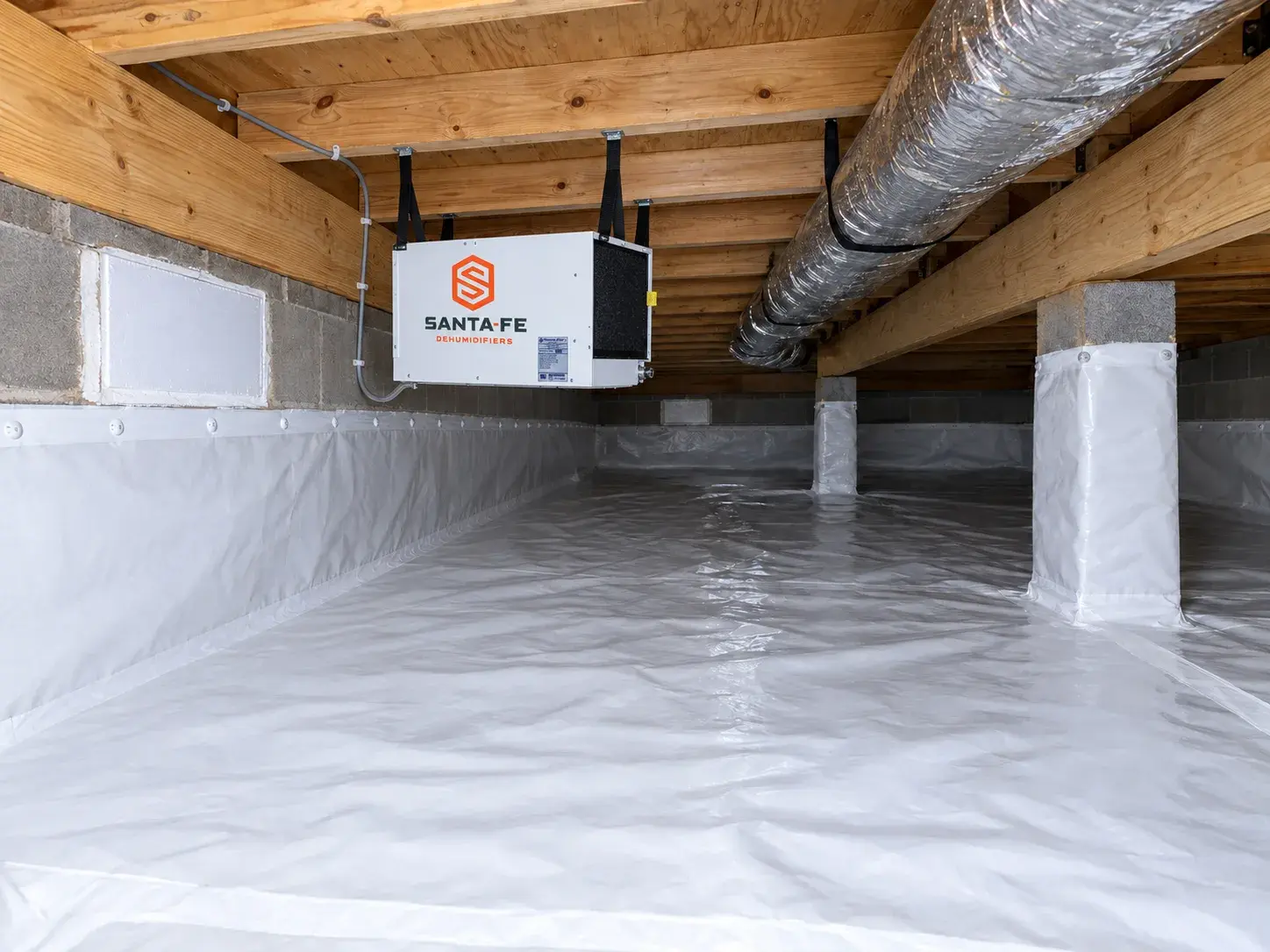
Quick answer: Crawl space encapsulation seals your crawl space with a heavy vapor barrier on the floor and walls, closes the foundation vents, and controls humidity with a dehumidifier. In Georgia's humid climate, it keeps mold, mildew, and wood rot away from your floor system, can lower heating and cooling costs, and is allowed by Georgia code when it's built to Section R408.3.
If your house sits on a crawl space in North Georgia, there's a good chance the air under your floors is wetter than the air outside. Musty smells in summer, insulation sagging between the floor joists, cupping hardwood floors, and condensation dripping off ductwork usually point to the same problem: a crawl space that's pulling in Georgia humidity and holding onto it.
Crawl space encapsulation is how we fix that. Here's what it is, why it works so well in our climate, what Georgia code requires, and how to tell whether your home needs it.
What Is Crawl Space Encapsulation?
Encapsulation turns your crawl space from an open, vented area into a sealed, controlled part of the home. A complete system usually includes:
A heavy-duty vapor barrier covering the dirt floor and running up the foundation walls, with sealed seams
Sealed foundation vents and rim joists so humid outside air can't keep flowing in
Sealed, insulated access doors
Moisture control, most often a dedicated crawl space dehumidifier that drains on its own
A plain sheet of plastic thrown over the dirt isn't encapsulation. If the vents stay open and the edges aren't sealed, humid air keeps getting in and the moisture problem stays.
Why Vented Crawl Spaces Struggle in Georgia
For decades, builders put vents in crawl spaces on the theory that outside air would dry them out. In a humid Southern summer it tends to work the other way. Hot, wet outdoor air flows into a cooler crawl space, the air cools, the humidity goes up, and moisture condenses on ductwork, pipes, and framing.
The best-known research on this comes from a few hours north of us. In a federally funded field study of matched homes in eastern North Carolina, Advanced Energy found that closed crawl spaces generally stayed below 60% relative humidity in summer, while the wall-vented crawl spaces were often above 80%. The study also found that framing lumber in the closed crawl spaces stayed below 12% wood moisture content, which the researchers noted makes surface mold less likely and makes the wood less attractive to termites and wood-boring beetles.
Those numbers matter because the EPA recommends keeping indoor humidity below 60%, ideally between 30% and 50%, to keep mold from growing. A vented crawl space sitting at 80% humidity all summer is right in the range where mold grows.
North Georgia adds another factor: our red clay. Clay soil holds water and drains slowly, so the ground under and around a crawl space can stay damp long after a storm passes. We covered that in detail in our article on North Georgia red clay foundation problems.
Signs Your Crawl Space Needs Attention
You don't have to crawl under the house to suspect a problem. Common warning signs include:
A musty or earthy smell inside the home, especially in summer or after rain
Floors that feel soft, bouncy, or cold, or hardwood that's cupping or buckling
Fiberglass insulation that's wet, sagging, or falling out of the floor joists
Condensation or "sweating" on ductwork and pipes
Standing water or mud on the crawl space floor after storms
Mold or white, fuzzy growth on joists and subfloor
Higher humidity indoors and an AC that seems to run constantly
Signs of pests, including termites, wood-boring beetles, or rodents
If you're seeing two or more of these, it's worth having someone inspect the crawl space before it turns into a wood rot or structural repair.
Mold and Mildew: What They Do to Your Floor System
Mold and mildew are the most common things we find in North Georgia crawl spaces. Mildew is the flat, powdery, white or gray growth you see on the surface of wood. Mold is usually fuzzy and darker, in green, black, or white. Both are fungi, and both mean the crawl space is too wet.
The floor system in a crawl space home is made of wood: the sill plates sitting on the foundation, the rim (band) joists around the edge, the girders and beams, the floor joists, and the subfloor under your flooring. All of it sits right above the damp ground and humid air.
How it starts. Mold doesn't need a leak. It can grow on wood surfaces from humid air alone. Researchers with the USDA Forest Service note that mold can spread on surfaces at around 80% relative humidity, which is right where vented crawl spaces sit for much of a Georgia summer.
Why it's a warning sign for rot. Surface mold and mildew don't usually weaken wood much on their own. But the USDA Forest Products Laboratory explains that mold can make wood absorb water more easily, which leaves it more open to decay fungi, the organisms that cause real wood rot. Decay fungi start breaking wood down once its moisture content rises above about 20%, according to the Forest Products Laboratory's Wood Handbook. Condensation from sweating ducts and pipes, water coming in after a storm, or wood touching wet soil can push framing past that point. Unlike surface mold, decay fungi digest the wood cell walls and can cause severe structural damage.
What that looks like in your home over time:
Soft, spongy, or bouncy floors as rot weakens the joists and subfloor
Sagging or uneven floors when joists, girders, or sill plates lose strength
Cupping, buckling, or gapping hardwood as damp air swells the wood from below
Squeaks and loose flooring as fasteners lose their grip in wet or decayed wood
Cracked drywall and sticking doors upstairs as the floor system moves
Musty odors in the living space as air from the crawl space rises into the house
Termites and wood-boring beetles, which are drawn to damp wood
The good news is that the Forest Products Laboratory says wood kept air dry will not decay, and decay already present won't keep going. That's the point of encapsulation: get the moisture under control and keep it there. Wood that's already badly rotted still has to be repaired or replaced. Sealing a crawl space protects good wood, but it doesn't make damaged framing strong again. That's why we inspect the floor system and fix it before we seal anything.
What Georgia Code Says About Sealed Crawl Spaces
Georgia allows unvented (sealed) crawl spaces, but they have to be built right. Under Section R408.3 of the residential code, as summarized by the Georgia Department of Agriculture, foundation vents are not required when:
The exposed earth is covered with a continuous Class I vapor retarder, with seams overlapped at least 6 inches and sealed or taped, and the edges run at least 6 inches up the stem wall and are sealed to it, and
The space has a way of controlling moisture, such as continuous mechanical exhaust, a conditioned air supply, or a dedicated dehumidifier.
The Georgia Department of Community Affairs has confirmed that an appropriately sized dehumidifier combined with the Class I vapor retarder satisfies the requirement. The Department of Agriculture's guidance adds that the dehumidifier has to drain its condensate automatically, whether by gravity, into a sump pump, or into the AC's condensate pump.
Why this matters for your termite bond: Georgia's pest control rules require companies to inspect under-floor ventilation against the residential code, according to the Georgia Department of Agriculture. A crawl space that's half sealed, with vents closed but no proper vapor barrier or moisture control, can cause trouble during inspections. Georgia's energy code also requires a 3-inch inspection strip below the floor joists when crawl space walls are insulated, so termite inspectors can still see the wood. A properly designed system takes care of both.
The Benefits of Encapsulation
A drier, healthier home. Air from the crawl space moves up into your living space. When the crawl space stays dry, the air you breathe upstairs is cleaner and less musty.
Protection for your floor system. Dry framing resists mold, mildew, rot, and wood-destroying insects. That protects your joists, sill plates, and subfloor, which are the parts of the house that hold everything else up.
Lower energy use. In the Advanced Energy field study, homes with closed crawl spaces used 15% to 18% less energy for heating and cooling over a year than the matched vented homes. Savings depend on the house, and they tend to be largest when your ductwork or air handler sits in the crawl space.
More comfortable floors. A sealed crawl space keeps floors from feeling cold in winter and cuts down on the summer humidity that makes hardwood swell and cup.
Usable storage. A clean, lined crawl space is a lot more pleasant to store things in, or to send a plumber or HVAC tech into.
A Note on Radon in North Georgia
North Georgia has higher radon potential than much of the state. On the EPA's county radon zone map, Gwinnett and Fulton counties are in Zone 1, the highest-potential category, while Hall, Forsyth, Lumpkin, Barrow, and Jackson are in Zone 2. The EPA recommends testing every home no matter what zone it's in, and fixing the home if levels reach 4 pCi/L or higher.
A vapor barrier can be part of a radon reduction plan, but encapsulation alone is not a guaranteed radon fix. In one Advanced Energy test site, radon actually increased in closed crawl spaces. If you haven't tested, test before and after encapsulation. If your levels are high, the system can be designed with a sub-membrane depressurization (radon mitigation) setup in mind.
What the Encapsulation Process Looks Like
Every crawl space is different, but a typical Precision project follows these steps:
Inspection and moisture readings. We check humidity, wood moisture, drainage, insulation, pests, and the condition of the piers, beams, and joists.
Fix water and structural issues first. If water is getting into the crawl space, that gets solved before anything is sealed (see How Does a Crawl Space Drain System Work?). Sagging floors or failing supports get corrected so the system goes in over a solid structure.
Clean-out and prep. Old wet insulation, debris, and loose plastic come out, and the floor gets graded where needed.
Seal the openings. Foundation vents, rim joist gaps, and penetrations are sealed, and the access door is sealed and insulated.
Install the vapor barrier. A heavy-duty liner covers the floor and runs up the walls, with seams overlapped and taped and the edges fastened and sealed, meeting or exceeding Georgia's R408.3 requirements.
Add moisture control. A properly sized crawl space dehumidifier is installed with automatic drainage.
Final walkthrough. We review the finished space with you and explain what to watch going forward.
What Affects the Cost of Encapsulation?
Every crawl space is different, so we price each job after an inspection instead of quoting a flat rate. The biggest factors are:
Square footage and height. Bigger crawl spaces need more liner, and low clearance takes more labor.
Liner thickness. Heavier liners cost more but stand up better to foot traffic and storage.
Wall coverage. Running the liner up the full foundation wall costs more than stopping a short way up.
Clean-out. Removing old wet insulation, debris, and torn plastic adds time.
Mold treatment. Active mold on the joists and subfloor needs to be treated before sealing.
Wood repair. Rotted sill plates, joists, or subfloor have to be repaired or replaced.
Structural support. Sagging floors may need new piers or supplemental beams.
Water. If water is coming in, that has to be solved first.
Dehumidifier and power. The unit size, plus whether a dedicated electrical circuit is needed.
The cheapest quote isn't always the best value. A thin sheet of plastic with the vents left open can cost less up front and still leave the moisture problem in place.
Is Encapsulation Right for Your Home?
Encapsulation is a strong fit if your crawl space has high humidity, musty odors, mold, wet insulation, or ductwork running through it. If water is actually coming in during storms, a vapor barrier alone won't handle it. Our article on how a crawl space drain system works explains that side of the fix. If your floors are sagging or uneven, that has to be addressed alongside it. Sealing a crawl space without fixing the water or the structure only covers up the problem.
That's why we start with an honest inspection instead of a one-size-fits-all package.
Frequently Asked Questions
Is crawl space encapsulation worth it in Georgia?
For most crawl space homes with humidity, musty odors, or mold, yes. Our summers keep vented crawl spaces damp, and in field research, closed crawl spaces stayed far drier and used 15% to 18% less heating and cooling energy than vented ones.
Is it legal to seal my crawl space vents in Georgia?
Yes, if the crawl space meets code. Georgia follows Section R408.3, which requires a sealed Class I vapor retarder and a method of moisture control such as a dehumidifier (Georgia Department of Agriculture). Closing the vents without the rest of the system can cause problems.
Will encapsulation get rid of mold?
Encapsulation takes away the moisture mold needs, but it doesn't kill mold that's already growing. Existing mold should be treated first, and badly rotted wood repaired, before the crawl space is sealed.
Do I need a dehumidifier after encapsulation?
In most Georgia homes, yes. Georgia's code guidance accepts a properly sized dehumidifier as the moisture control method, and it needs to drain its water automatically (Georgia DCA).
Is a vapor barrier the same as encapsulation?
No. A vapor barrier on the floor is only one piece. Full encapsulation also seals the vents, rim joists, and access door and adds moisture control.
Does encapsulation affect my termite bond?
It can, which is why it needs to be done right. Georgia pest control companies inspect crawl space ventilation against code, and insulated walls need an inspection gap so the wood stays visible (Georgia Department of Agriculture). Let your pest control company know before the work is done.
How long does encapsulation take?
Most encapsulations take about one to three days. Larger crawl spaces, or jobs that also need mold treatment, wood repair, or structural work, can take longer.
Free Crawl Space Inspections Across North Georgia
Precision Waterproofing & Foundation Repair is based in Buford and serves homeowners throughout North Georgia, including Buford, Gainesville, Cumming, Dahlonega, and the surrounding Gwinnett, Hall, Forsyth, and Lumpkin County communities. We're proud to have been named Best of Georgia and Best of Gwinnett in 2024 and 2025, and Best of Hall County in 2026.
If your crawl space smells musty, your floors feel off, or you just don't know what's going on under your house, we'll take a look and give you a straight answer.
Call 470-266-1574 or request your free estimate today.