Interior Basement Waterproofing System Installed in Gainesville GA
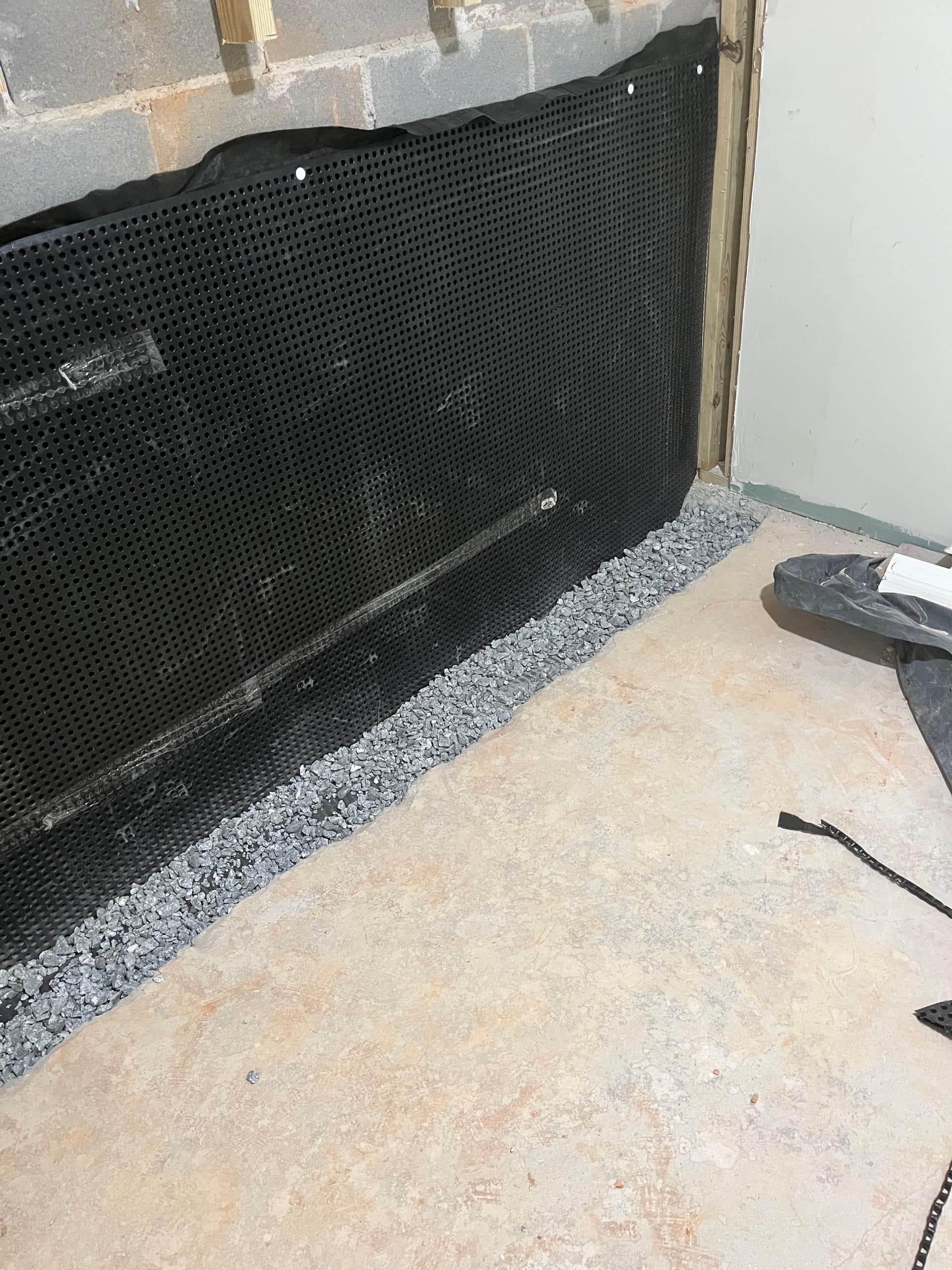
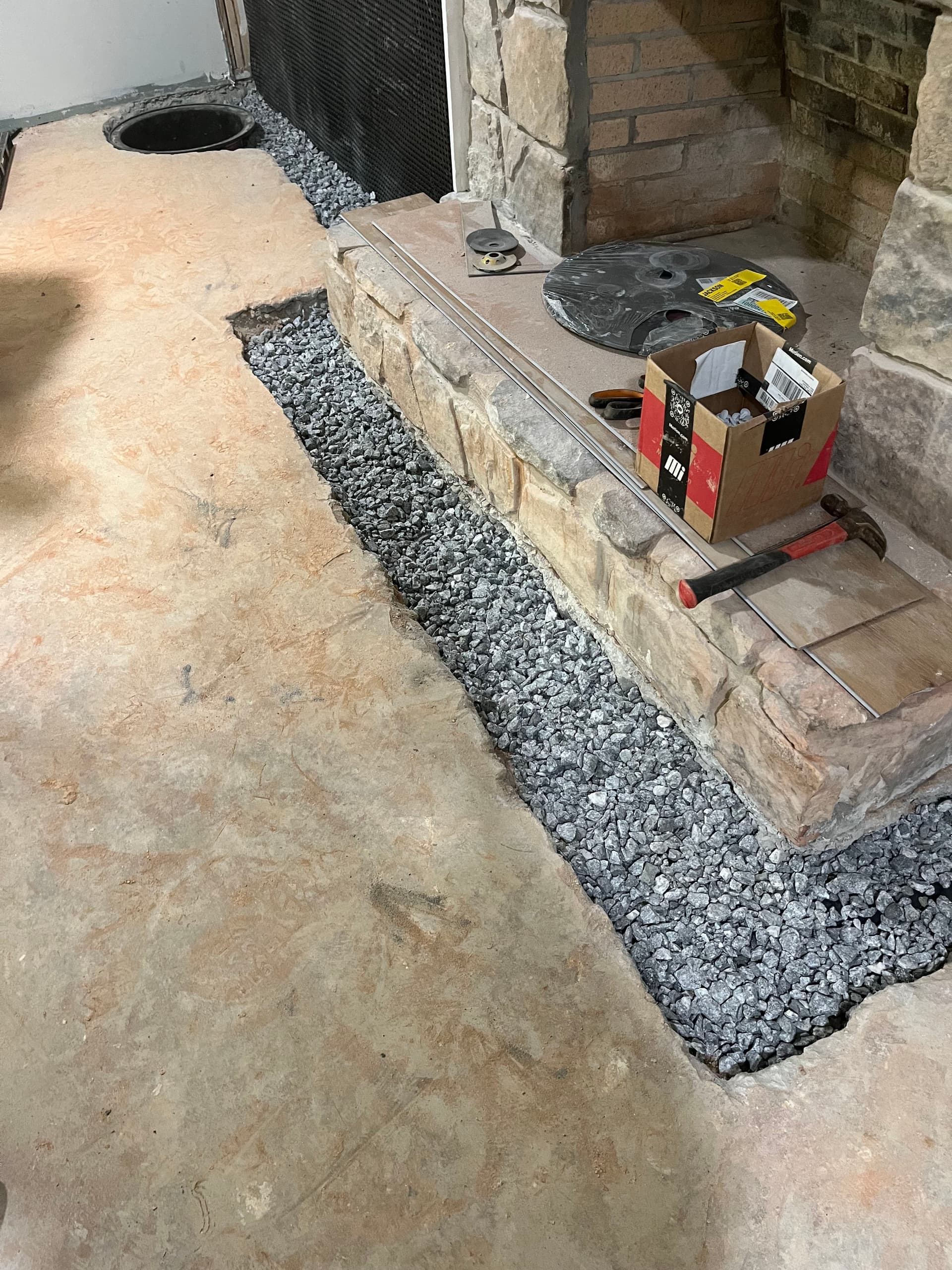
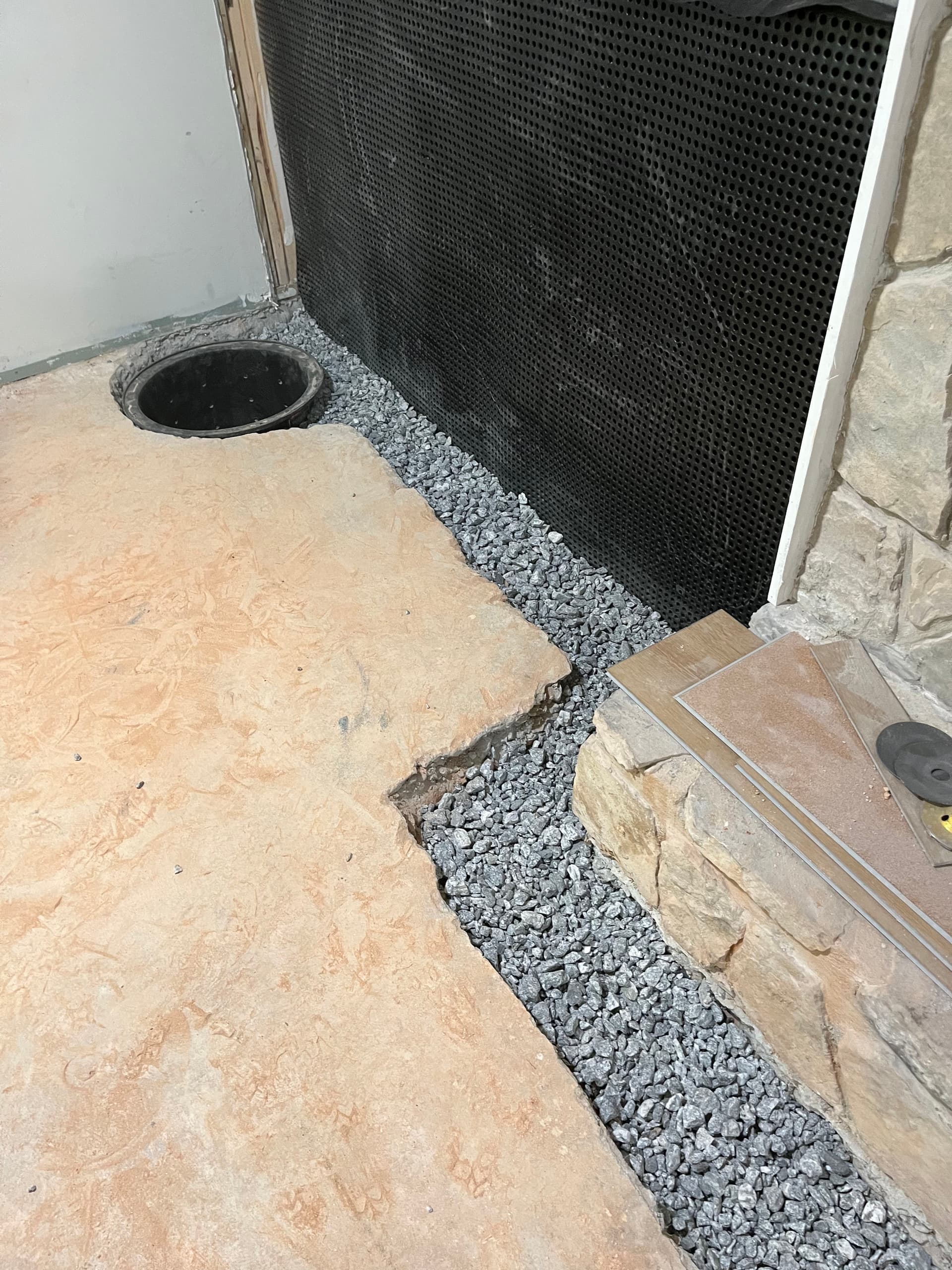
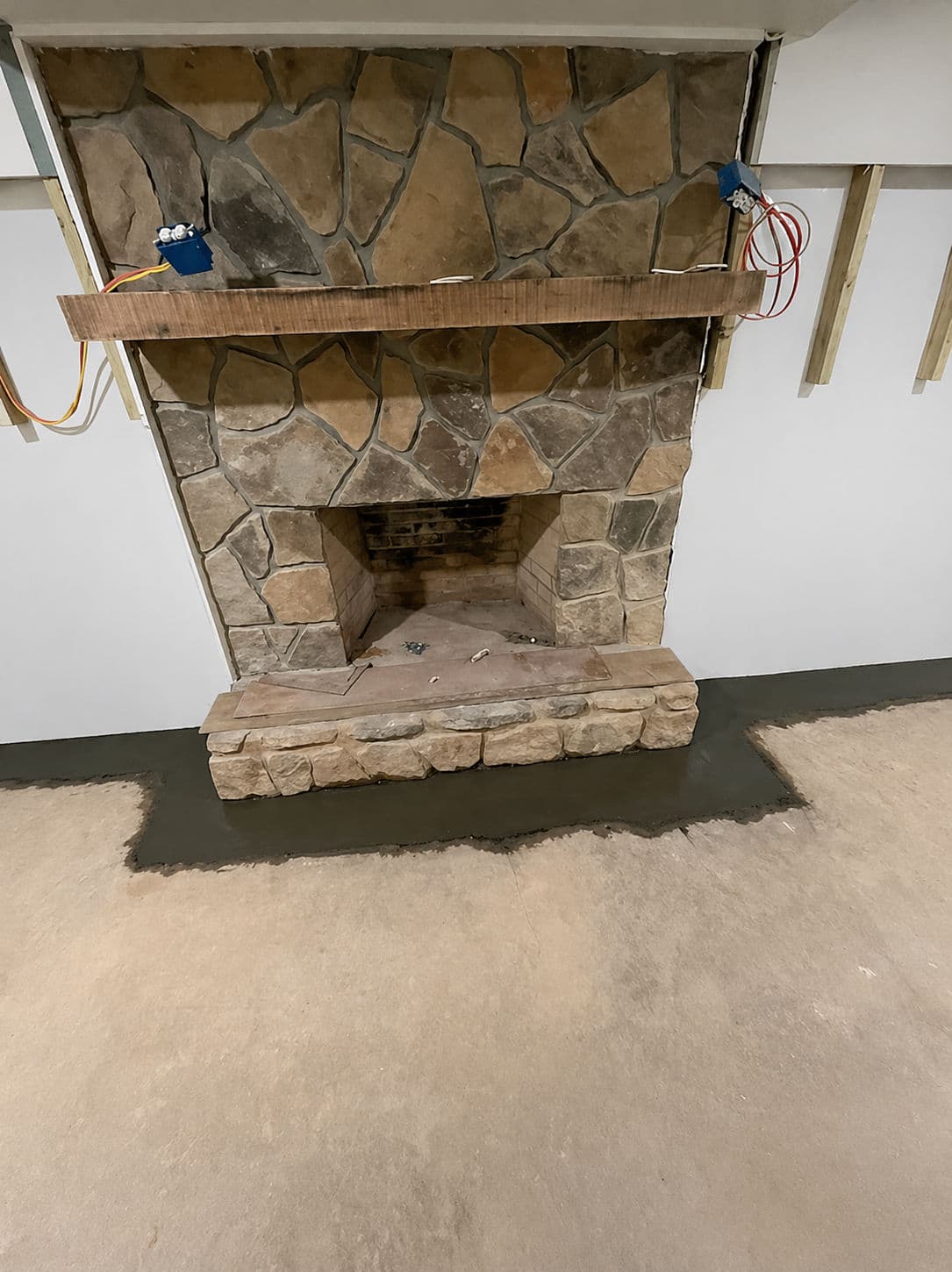
Hydrostatic pressure is one of the sneakiest problems a basement can have. Water builds up in the soil around your foundation, and eventually that pressure finds a way in - through cracks, seams, and the wall-floor joint. That's exactly what we were dealing with here in Gainesville, GA.
The approach we used is an interior drainage system. We cut a perimeter trench along the basement floor, packed it with gravel to allow water to move freely, and installed a dimple-board drainage mat along the walls. That mat creates a channel behind it so any water that makes it through the wall gets directed down and away - instead of onto your floor. The sump pit you can see cut into the floor is where all that water ultimately goes, ready for a pump to push it out of the house.
What makes this method effective is that it works with the water pressure rather than trying to fight it head-on. Exterior waterproofing is great, but it's not always practical - especially in finished or partially finished basements like this one. Interior systems give you reliable water management without having to excavate around the entire foundation.
The final concrete pour over the trench ties everything back together, and you end up with a clean floor that hides the whole drainage system underneath. No visible pipes, no exposed gravel - just a basement that's set up to handle whatever water pressure comes its way.
Catching this kind of issue before the water damage sets in is always the smarter play. Mold, framing rot, and structural problems are all downstream consequences of unchecked hydrostatic pressure. Getting the drainage right early keeps all of that off the table.